Product Description
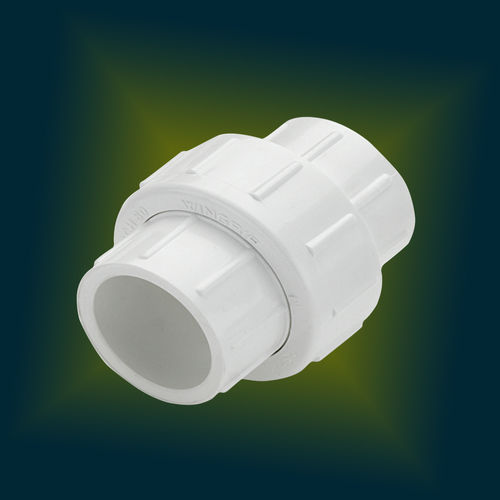
Perfect to control and regulate the flow of liquids through a sequence of pipes, this UPVC Union that finds usage in reverse osmosis systems, ice makers, beverage dispensing equipment, hydroponics and automation. Our offered union is manufactured using high quality unplasticized polyvinychloride. Further, this UPVC Union is checked on various quality parameters as per the international quality standards. We offer this range in various specifications to meet specific applications of our precious customers.
Optimal Chemical and Corrosion ResistanceDesigned to withstand exposure to aggressive chemicals, our UPVC unions feature excellent resistance to acids and alkalis. Their non-corrosive nature ensures durability, even in challenging environments, making them especially suitable for industrial and chemical applications.
Installation Made Effortless and Leak-ProofInstallation is straightforward due to their user-friendly jointing system, compatible with both solvent cementing and threaded connections. Their design supports easy assembly, ensuring robust, leak-proof, and maintenance-free operation for a wide range of pipe networks.
Suitable for Multiple ApplicationsWhether for residential plumbing, irrigation systems, industrial pipelines, or potable water distribution, our UPVC unions are versatile and reliable. UV stabilization ensures their integrity outdoors, while compliance with major standards underlines their overall dependability and safety.
FAQs of UPVC Union:
Q: How do I install a UPVC union for optimal leak-proof performance?
A: UPVC unions can be installed using either the solvent cement method for plain ends or by tightening the threaded ends with compatible pipe threads. Ensure surfaces are clean and dry before joining. Using the recommended installation techniques ensures a tight, leak-proof connection.
Q: What applications are UPVC unions best suited for?
A: These unions are ideal for water supply, plumbing, irrigation systems, industrial pipework, and applications where chemical resistance is essential, such as handling acids and alkalis. Their UV stability and non-corrosive composition make them suitable for both indoor and outdoor use.
Q: When should I choose plain versus threaded end types?
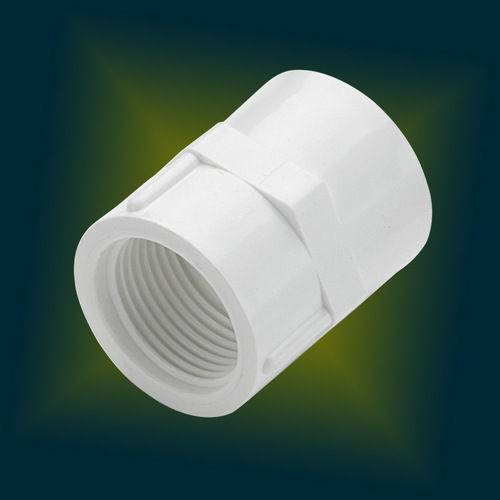
A: Select plain ends when planning to use solvent cement for permanent joints, ensuring a strong, seamless bond. Threaded ends are preferable for systems where future disassembly or maintenance might be needed, allowing easy removal and reconnection.
Q: Where can UPVC unions be used in potable water systems?
A: UPVC unions are lead-free and meet stringent safety standards, making them suitable for any point within potable water supply systemssuch as main line couplings, branch connections, or distribution manifoldswhere a secure and hygienic joint is necessary.
Q: What is the process for jointing UPVC unions?
A: The jointing process varies by end type: for plain ends, apply solvent cement to both surfaces and join them firmly. For threaded ends, wrap pipe threads with PTFE tape before screwing together to ensure a watertight seal. Allow appropriate curing time before pressurizing the system.
Q: How does using a UPVC union benefit plumbing or industrial piping systems?
A: UPVC unions facilitate system assembly and future maintenance, offering corrosion and chemical resistance for longer service life. They enable convenient pipe disconnection without damaging pipelines, reduce maintenance costs, and provide hygienic solutions for potable water applications.







 Send Inquiry
